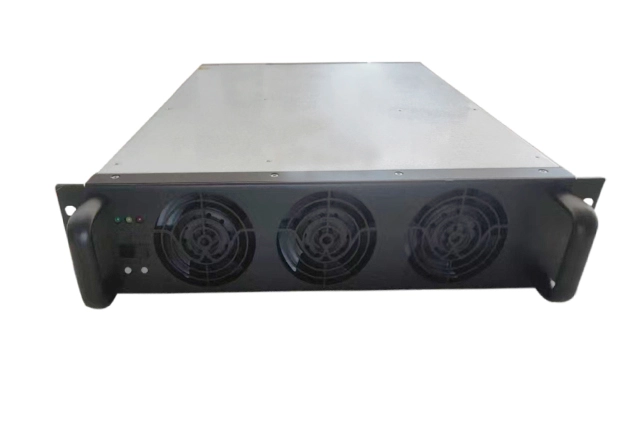
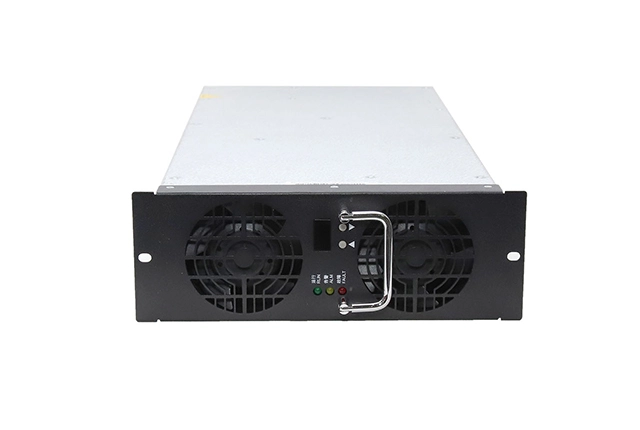
Driven by generative AI and the rapid expansion of hyper-scale data center infrastructure, global AI campus power demand is accelerating from tens of megawatts (MW) to the 200–1,000 MW (0.2–1 GW) range, with emerging projects increasingly evolving toward gigawatt-level clusters. At the same time, higher renewable energy penetration is increasing grid volatility, driving stronger demand for flexible power resources capable of fast response and load balancing.
Against this backdrop, battery energy storage systems (BESS) are evolving from traditional applications—such as peak shaving and backup power—into core infrastructure that ensures grid stability and facilitates the integration of renewable energy. According to forecasts by the International Energy Agency (IEA) and BloombergNEF (BNEF), annual global additions of battery energy storage capacity are projected to reach approximately 158 GW/459 GWh by 2026, maintaining an average annual growth rate of over 30% to 40%, with grid-scale projects accounting for the vast majority of total installed capacity. Meanwhile, the industry is rapidly advancing from a cumulative installed capacity scale of hundreds of gigawatt-hours (GWh) toward the terawatt-hour (TWh) level.
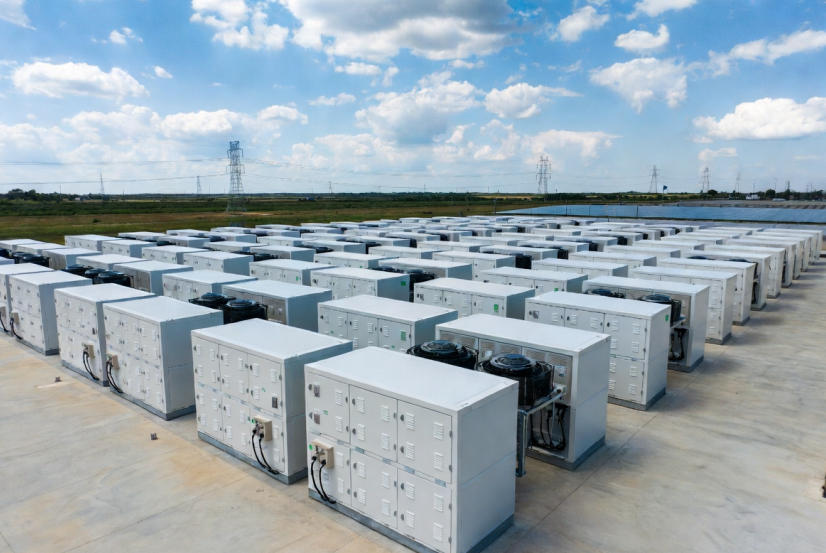
In parallel, energy storage deployment within AI data center ecosystems is rapidly increasing, with typical system sizing expanding from 10–50 MWh to 100–500 MWh, and in some hyperscale campuses moving toward GWh-level configurations to address grid interconnection delays, AI workload fluctuations, and high-reliability power requirements.
This evolution is placing significantly higher requirements on power conversion systems, particularly in terms of wide voltage adaptability, higher power density, and modular scalability.
To address this demand, Maxwell has focused on developing the AIDC-800V power conversion module specifically for data center power systems, where the primary load consists of power electronics supplying AI computing chips. Given the significant fluctuations in power consumption associated with these AI chips, the module must consistently operate in a highly dynamic, constant-voltage mode. As a key component of the data center's 800V power architecture, the AIDC-800V module works in close coordination with the 800V BBU (Battery Backup Unit) to form an integrated system that maintains a stable 800V bus voltage. In the event of a sudden grid power failure, the system rapidly draws power from the battery to sustain the 800V bus, thereby preventing data loss within the AI computing chips.
To learn how our power converters can support next-generation AI data centers and energy storage systems, please contact us for datasheets, technical support, and collaboration opportunities. Together, we are accelerating the transition toward a more resilient and renewable-powered future!
Save cost-with manufacturer direct pricing
Control quality-with strict quality control and testing
Save time-with experienced team to get project done
 English