As renewable energy continues to take an increasing share of Australia’s electricity mix, battery energy storage systems (BESS) are becoming a critical component for the power sector, industrial enterprises, and commercial users. According to the Australian Energy Market Operator (AEMO) 2025 Electricity Statement of Opportunities, Australia’s grid-scale energy storage capacity is projected to reach 3.5 GW / 10 GWh by 2028, up from approximately 1.2 GW in 2023. This growth reflects the country’s urgent need for flexible energy solutions, while creating new investment opportunities for data centers, industrial parks, and distributed energy projects.
As of March 2026, Australia’s grid-scale battery storage capacity has surpassed 2 GW / 6 GWh, reflecting rapid deployment in the past year. The Hornsdale Power Reserve in South Australia continues to provide fast frequency response and grid stabilization, while the Victorian Big Battery is operational, supporting peak load management and renewable energy integration. New South Wales’ Wallgrove BESS project and several solar-plus-storage demonstration projects in Queensland also came online or were nearing commissioning in the first quarter of 2026, highlighting the ongoing expansion of Australia’s storage capacity.
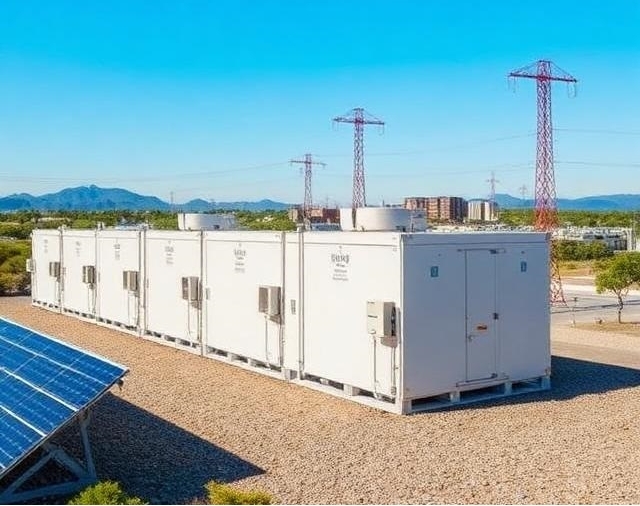
Across the country, large-scale BESS projects continue to be deployed to enhance grid stability and support renewable energy integration. New South Wales plans multiple centralized storage systems ranging from 50–100 MW / 150–300 MWh for peak load management and frequency regulation. Queensland is developing several solar-plus-storage demonstration projects, including 20 MW / 40 MWh systems to supply green electricity to industrial parks and large commercial facilities. In Victoria, new data centers have installed 5 MW / 10 MWh BESS systems to optimize night-time electricity costs and mitigate grid fluctuations, improving the reliability of power supply for critical operations.
Distributed energy storage is also expanding rapidly in industrial and commercial sectors. Mining companies and industrial parks are deploying 1–5 MW / 2–10 MWh modular storage systems to shave peak loads, reduce electricity costs, and increase operational flexibility. Retailers, logistics hubs, hospitals, and large commercial complexes are installing 100–500 kW systems to provide backup power and optimize daily energy use. Falling lithium-ion battery costs, combined with supportive government incentives, are driving the rapid adoption of BESS, while the integration of modular storage with intelligent energy management systems (EMS) enables businesses to optimize energy usage in real time, maximize renewable energy utilization, and reduce operational expenses.
According to market projections and government data, Australia’s total energy storage capacity is expected to exceed 10 GW / 30 GWh by 2030. Both large-scale centralized storage and distributed storage projects will play a crucial role in stabilizing the grid and providing reliable power for data centers, industrial enterprises, and commercial users, while creating significant commercial value for investors and technology providers. As BESS projects continue to come online, Australia’s energy storage market is entering a period of rapid growth, representing a strategic opportunity for companies and investors alike.
Save cost-with manufacturer direct pricing
Control quality-with strict quality control and testing
Save time-with experienced team to get project done
 English