The contemporary energy transition relies heavily on a few critical, high-impact applications:
Battery Energy Storage Systems (BESS): BESS units act as massive shock absorbers for the grid, capturing intermittent wind or solar power and releasing it when demand spikes.
15 large-scale BESS projects from Australia representing 4.2 GW / 16.1 GWh of storage under the Capacity Investment Scheme (CIS) Tender 8. Notable projects moving into deployment include Ampyr's 300 MW Bulabul 1 Battery, Ascera's 400 MW Gelston Energy Park, and HMC Capital's 300 MW Moorabool Battery.
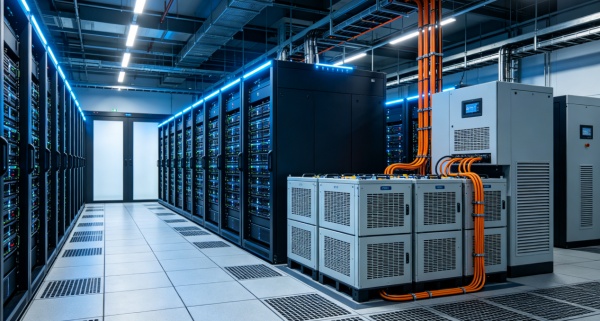
AI Data Centers: Artificial intelligence workloads consume unprecedented amounts of power. BESS integration is increasingly required at data center sites to shave peak loads, ensure uninterrupted server uptime, and bridge the gap caused by long utility interconnection delays.
Large-scale "mega-campuses" dominate development in America, the most ambitious is the proposed 9 GW Stratos AI and data center campus in Utah. Other major projects breaking ground include CloudBurst Data Centers’ 1.2 GW flagship campus in Central Texas and Applied Digital Corporation's $3.6 billion Delta Forge 1 AI campus in Louisiana
Every single watt entering or exiting a battery pack, AI server rack, or heavy truck requires processing. Batteries and electronic chips natively run on DC power, whereas the public grid runs on AC. Power converters handle this bridge, and their performance determines overall project viability.
Traditional conversion hardware often struggles with severe thermal bottlenecks under continuous high-power loads. When converters overheat, their efficiency drops sharply, forcing operators to down-rate the power output to avoid system failure. This is exactly where advanced power hardware dictates the speed of the energy transition.
To overcome severe thermal limits, manufacturers are transitioning away from noisy, maintenance-heavy air fans toward sealed, liquid-cooled power hardware. A prime example of this technological evolution is the Maxwell 60kW liquid-cooled module series (including the MXR150060BL and MXR100060BL).
Extreme Voltage Adaptability: Featuring ultra-wide output ranges up to 1500V DC, they seamlessly match the escalating voltage profiles of modern megawatt BESS containers and fast-charging heavy trucks.
Environmental Resilience: By opting for a fully sealed, liquid-cooled, and Potting solution design, Maxwell eliminates the dust and humidity vulnerability common to air-cooled systems. This permits silent, zero-derating operation in harsh, unconditioned environments like roadside charging plazas or heavy industrial hubs.
Scalable Modular Design: Their high power density allows project developers to parallel up to 60 units, easily scaling modular blocks from 60kW to multi-megawatt configurations tailored for MCS EV charging projects.
By boosting reliability and minimizing energy waste through closed-loop liquid thermal management, high-power converters ensure that massive green infrastructure investments can deliver the fast, continuous, and cost-effective power required to clear the grid's next hurdles.
Save cost-with manufacturer direct pricing
Control quality-with strict quality control and testing
Save time-with experienced team to get project done
 English