Hydrogen is gaining attention as a promising solution for long-duration energy storage, renewable energy integration and industrial decarbonization in the United States.
As solar and wind power capacity continues to expand, managing intermittent electricity generation has become an important challenge for the U.S. energy system. Hydrogen offers a way to convert surplus renewable electricity into a storable energy carrier through water electrolysis, allowing energy to be stored for extended periods and used later for power generation or industrial applications.
Unlike conventional battery storage, which is generally better suited to short-duration applications, hydrogen has the potential to support long-duration and seasonal energy storage. It can also serve as a low-carbon feedstock for industries such as steelmaking, ammonia production and refining.
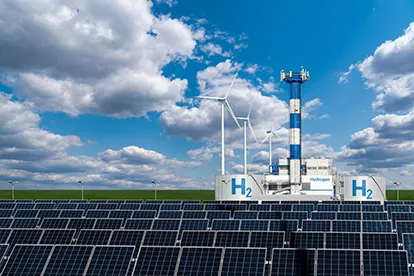
The U.S. government has established several initiatives to accelerate hydrogen development. Under the Infrastructure Investment and Jobs Act, approximately $8 billion was allocated to Regional Clean Hydrogen Hubs, alongside $1 billion for electrolysis research, development and demonstration.
Additionally, Section 45V of the Inflation Reduction Act introduced production tax credits for qualifying clean hydrogen facilities, with incentives of up to $3 per kilogram, depending on lifecycle carbon emissions and applicable labor requirements. However, following legislative changes in 2025, facilities beginning construction after December 31, 2027, are no longer eligible for this credit.
Despite evolving policy conditions, hydrogen remains an important part of the U.S. clean energy strategy, supported by growing interest in energy security, renewable energy utilization and industrial decarbonization.
Efficient water electrolysis depends on stable and precisely controlled DC power. As hydrogen production systems scale up, high-efficiency power conversion technology becomes increasingly important for improving energy utilization, operational reliability and system flexibility.
Maxwell Power offers dedicated 100kW power modules for hydrogen production applications, designed for integration into electrolyzer power supply systems. With modular architecture and a focus on efficient and reliable power conversion, these solutions support equipment manufacturers and system integrators in developing scalable hydrogen production systems.
As the hydrogen economy continues to evolve, advanced power electronics will play an essential role in connecting renewable electricity with efficient hydrogen production and long-duration energy storage.
Save cost-with manufacturer direct pricing
Control quality-with strict quality control and testing
Save time-with experienced team to get project done
 English