High-power commercial DC charging stations are typically built around multiple power modules rather than a single large power conversion unit. This modular architecture allows charger manufacturers to scale output power, distribute power between connectors, improve serviceability, and potentially maintain partial charging capacity if one module is unavailable.
For example, a 120 kW DC fast charger can be designed with four 30kW charging modules operating in parallel. The right module configuration, however, depends on more than total kW. Output voltage, maximum current, constant-power range, efficiency, thermal performance, communication, and system redundancy all affect real-world charger performance.
An EV DC charging module converts incoming electrical power into controlled DC voltage and current that can be delivered to the vehicle battery.
In a commercial charger, several modules can operate together under the charger controller. The system adjusts module output according to the vehicle's charging requirements, battery state of charge, temperature, and available station power.
This modular approach also makes it easier to create different charger power ratings from the same basic platform.
For example:
| Charger Output | Example Module Configuration |
| 30 kW | 1 × 30 kW module |
| 60 kW | 2 × 30 kW modules |
| 90 kW | 3 × 30 kW modules |
| 120 kW | 4 × 30 kW modules |
This makes 30 kW modules a practical option for scalable commercial charging equipment where different system power levels are required.
Using four 30 kW modules is one possible configuration for a 120 kW DC fast charger that can offer power density, scalability, and maintenance flexibility.
Compared with a single large conversion unit, a modular design offers several practical advantages.
If one module requires maintenance, the remaining modules may still provide reduced charging capacity, depending on the charger design and control strategy. Manufacturers can also use the same 30kW platform to develop several charger power levels without completely redesigning the power architecture.
A 30 kW DC fast charger can therefore serve as a standalone lower-power charging solution, while the same module technology can be expanded into 60 kW, 90 kW, or 120 kW charging systems.
Maxwell's 30kW AC-DC charging module range, for example, supports wide DC output voltage requirements for modular EV charging applications.
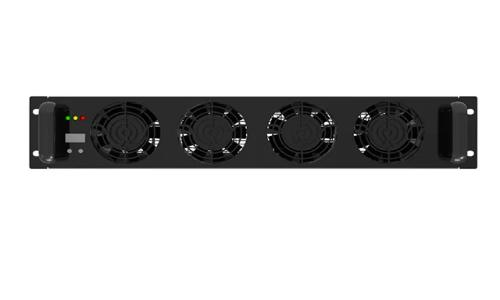
No. A 120 kW charger provides maximum rated system power, but actual charging power depends on the vehicle's battery voltage, state of charge, temperature, BMS limits, charger output current, and power sharing between connectors.
A vehicle that accepts only 60 kW will not charge at 120 kW. Therefore, voltage and current capability are as important as rated power.
Module selection should consider system performance, not just rated power.
Output voltage and current: The module must cover the target vehicles' battery voltage range and provide sufficient current, especially at lower voltages.
Constant-power range: Check the voltage range over which the module can maintain rated power.
Efficiency and thermal performance: Higher efficiency reduces power losses and heat. Review temperature derating for outdoor installations in hot climates.
Parallel operation: Reliable communication and current sharing help distribute loads between modules.
Maintenance and redundancy: Modular designs simplify replacement and may reduce downtime, depending on system design.
The right power level depends on vehicle turnover, charging time, and site power capacity.
A 30 kW DC charger may suit workplaces, dealerships, and fleet depots where vehicles stay parked longer, while a 120 kW charger is better for sites requiring higher throughput and shorter charging sessions.
Insufficient grid capacity can increase infrastructure costs, so consider vehicle demand, simultaneous charging, and future expansion before selecting charger power.
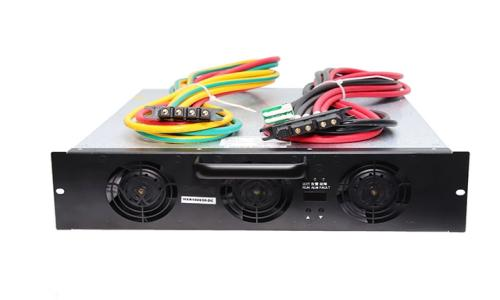
Modular design allows manufacturers to build different power levels from a common platform and distribute power dynamically between charging connectors.
For example, a 120 kW system may allocate more power to one vehicle when the second connector is unused and redistribute power when both connectors are active.
High-power DC charging performance depends on module specifications and system design. Modular architecture supports scalable power, flexible power sharing, and easier maintenance. The final configuration should match voltage and current requirements, thermal performance, and expected charging demand.
Four 30 kW modules can provide a nominal combined output of 120 kW if the system supports this configuration.
Actual charging power depends on the vehicle's battery, BMS limits, voltage, temperature, and state of charge.
Modular charging supports scalable power, flexible power distribution, and easier maintenance.
Save cost-with manufacturer direct pricing
Control quality-with strict quality control and testing
Save time-with experienced team to get project done
 English